


“Twelve years later, I still say volunteering bij ESC was the best experience of my life. Wingerdbloei gave me a great opportunity to grow as a person.”
Maria from Spain
“I had the opportunity to work with people from diverse cultural backgrounds, improve my language skills, and make a meaningful contribution to the local community. The cultural exchange was enriching, and I gained a broader understanding of the challenges faced by young people from socially disadvantaged backgrounds.”
Natacha from Macedonia
“My stay in Belgium with Wingerdbloei was crucial for my later development and for gaining a clearer idea of what I would like to do professionally. My time there didn’t directly lead me to where I am now, but it definitely helped me find my path.”
Nelly from Germany
Wingerdbloei a brief introduction

Wingerdbloei is a Non-Governmental Youth Care Organization located in Antwerp, Flanders, Belgium.
We provide care for minors aged 3 to 21 who are under the supervision of a Belgian juvenile judge (mandatory assistance) or the Committee for Special Youth Care (voluntary assistance). The young people entrusted to our care often carry a complex burden. They may experience broken or fragile family bonds, sometimes they live in our residential setting or struggle with emotional challenges, traumatic experiences, poverty, behavioral difficulties or have the status of an unaccompanied minor refugee.
Wingerdbloei ensures a safe and trusting relationship for young people in our care: a place where a child can truly be a child and develop to their full potential. We build a village around every child and their parent. Our work is rooted in love and respect for every individual. At Wingerdbloei, we search for the unique ingredients needed to create a tailored journey together with each young person and their village.
Our primary goal is to facilitate reintegration into the home environment or support independent living, empowering young people to become resilient and capable of managing their past challenges. In doing so, we work closely with them and their families, always with an eye on the best possible future. Wingerdbloei strives to create positive influences and new opportunities for the boys and girls in our care. One of our key focuses is the method of non-formal, experience-based learning
Our units
Residential units
Six residential units accommodate minors, ranging from 3 to 18 years of age. When home situations temporarily present challenges that cannot be resolved spontaneously or solely through family counselling, staying in a residential group can be a necessary solution. In addition to supporting and caring for the parents, the group provides educational care for the children. This ensures that the guidance helps children develop optimally in all areas while primarily residing in the group.
Unaccompanied minor refugees units
Two living units accommodate minor refugees who have fled war zones to Belgium without their families. Providing warm shelter and being a safe haven is central to our mission. We support these young individuals in their migration process, working closely with their appointed guardians, significant family members and schools. We seek future prospects and focus on maintaining and strengthening meaningful contacts and the social network of each young person. The atmosphere in both groups is very hospitable; if you visit as an outsider, a meal is always provided, and someone will sit down with you for a nice chat over a cup of tea or coffee.


Studio training
Studio training in which girls and boys age 17 to 21 are being trained to independent living.
They are guided in various matters that come with living alone: housekeeping, budgeting, school and/or work, therapy, …
At the end of their traject we are proud when we see them living independently as empowered and resilient adolescents.
Family guidance
Counselling and pedagogical support to parents and children living at home. Our main goal is to strengthen the position and educational power of parents and to maintain and/or restore the bond between child(ren) and their family.
The ESC-Project
The volunteer will act as a buddy and positive role model for the children and teenagers in care at Wingerdbloei. We are convinced that the presence of an international volunteer brings added value to the support of the youngsters. They learn about different cultures, ways of living and perspectives.
In addition, the volunteer is not a “professional”, but someone who is motivated, acts from the heart and is eager to learn. This often creates a genuine and authentic connection with the young people, offering them a supportive and inspiring role model they can relate to and trust.
The presence of international volunteers offers the youngsters a relatable and encouraging example. We have noticed that European volunteers make a meaningful contribution to the emotional well-being of our youth. Their way of working – driven by empathy and personal engagement rather than by diploma – often creates a pure and authentic connection, something our young people deeply long for.
Volunteer: Tasks and Role
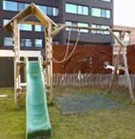
- You can participate in free time activities, excisting and new to develop. As a volunteer you can bring your own ideas. Every day the youngsters living in the residential care units have free time after school, between homework, dinner an bedtime. This is often difficult for them to fill . You could organise activities such as group games, handy crafts, active evenings, sport activities etc.
- Accompany during visits: When a youngster has a good contact with a volunteer it can be stimulating to have a trusted person next to them when visiting a doctor, the home context or other places outside. As a volunteer, you never replace the professional caretakers, but you are an extra support for the young people in our care.
- Logistic tasks: you can help with preparing free time activities together with care workers, preparation of food, sorting out handy craft material, doing shopping, setting the table, help with washing, dishes etc.
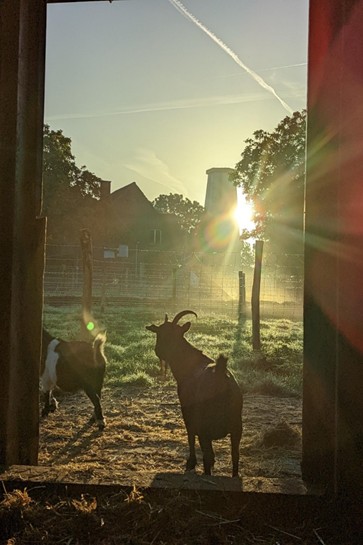
- Accompany during camp and outdoor activities (hiking , biking, …) An extra person joining during camp is often very welcome. A camp is a yearly activity which gives the youngsters the opportunity to spent some time in a more rural environment and also opens the possibility for a different approach towards the youngsters. During a camp there are cultural visits, games in the forest, camp fire, creative activitie, …
If a European youth exchange is organised in Belgium, and Wingerdbloei is host country, the volunteer can participate in the preparation and realisation by providing logistical support. The volunteer will be asked to engage according to personal interest and capacities. - We are open for all kind of new initiatives to bring extra possibilities during the free time of the youngsters. We will support new proposals brought in by you. There are a lot of opportunities because we work with a lot of people from foreign origin, who are open for more “integrating possibilities” ( f.e. creative workshops for young people from foreign origin, sport activities instead of “hanging around”…)
As a volunteer you don’t have ultimate responsibility and will always be supported by professional care workers.
Expected learning outcomes
The volunteer will grow as an active young European citizen by living and working in Belgium, gaining insight into life in a 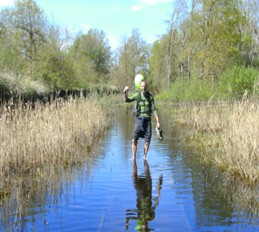 Flemish city and the functioning of the non-profit sector. Through daily interaction with young people, professionals, and other volunteers, they will develop strong social, intercultural, and communication skills.
During the project, the volunteer will:
- Strengthen personal independence, resilience and adaptability
- Gain practical experience working with vulnerable and disadvantaged youth
- Develop teamwork, empathy and conflict-management skills
- Build confidence in taking initiative and responsibility in a professional setting
- Learn about Belgian and Western European culture and society
- Improve language skills in Dutch and English (and possibly French)
- Learn how to work in an intercultural environment and reflect on their own values and perspectives
By building meaningful connections and participating in daily life in Belgium, the volunteer will broaden their perspective while also becoming a positive and inspiring presence for the young people in our care. Through this exchange, the youngsters are encouraged to discover new possibilities, broaden their horizons, and explore opportunities beyond their familiar environment.
Practical arrangements and support
- Food & Pocket Money:
Volunteers eat with the youth during activities and receive €280 as a monthly food allowance and €6 a day as pocket money. All housing and utility costs are covered by the host organization.
 - Accommodation & Transport:
Volunteers are accommodated in a fully furnished apartment shared with another volunteer, with Wi-Fi provided. They should bring their own laptop if needed. - Holidays:
Volunteers work a maximum 38 hours a week, split over 4 to 5 days a week. Training and supportive coaching moments are included within the 38 working hours.
Each month you get 2 free days that you can save up to take f.e. a week of holidays. Time off must be requested in advance. - Language Training:
Volunteers take an Dutch course and language assessment. Time for language learning is included in the work schedule. - Training & Support:
Pre-departure support is given by the sending organization. On-arrival and evaluation training is provided by the national agency. A mentor and professional staff we offer ongoing support. We provide training on managing challenging behaviour and our staff are also available for on-the-job training and guidance.
Our European Story:
Erasmus + and European Solidarity Corps
Since 2003, the organization has actively participated in the European Solidarity Corps and Erasmus+ programs:
- Hosting ESC volunteers for enriching volunteer experience
- Sending ESC-volunteers to several projects
- Hosting youth exchanges in Belgium and participating in several abroad
- Organizing trainings on inclusion and voluntary work
- Running job shadowing projects with Slovenian youth workers
- Supporting a youth initiative in Antwerp for peer-led free time activities
These projects aim to broaden horizons and offer meaningful, life-changing experiences.
Would You Like to Join Us?

Interested in an meaningful and enriching volunteer experience?
Through the link below, you can discover whether we currently have open volunteer positions and which units are looking for volunteers.
If you would like to join us, simply fill in the application form: Click here
You want some more information or have some questions: europe@wingerdbloei.be